Minnesota State Vintage SVG Sublimation: A Designer’s Review
First Impression: A Nostalgic Shape With Quiet Confidence
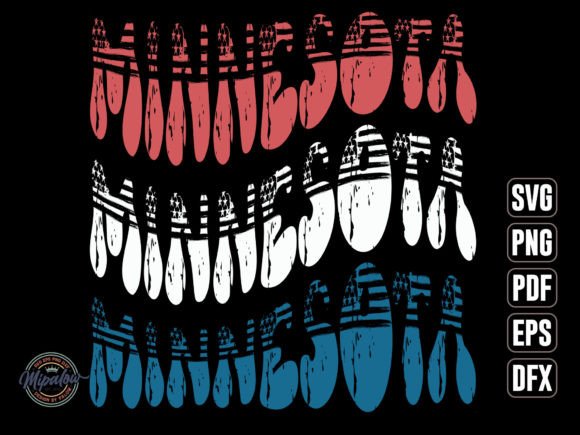
Opening the file, the first thing that hits you is the mood. This isn’t a loud, modern graphic. The Minnesota State Vintage Svg Sublimation leans into a worn, weathered personality that feels like something you’d find in a family cabin or a small-town mercantile. The state silhouette anchors the composition, and the typography around it carries a gentle, old-fashioned weight. It’s not trying to be perfect—and that’s exactly why it works. As a designer who spends days thinking about how a flat graphic will live as texture on fabric, I immediately started imagining it on a soft, washed-out crewneck or a sturdy canvas tote. The design feels personal, like a memory you’d want to stitch into something tangible.
How It Translates Into Real Embroidery Projects
I’ll be honest: this is a digital file built for cutting machines, not an embroidery file. So my first thought was, “How cleanly can I digitize this?” The short answer is: pretty well, if you respect the original vibe. The bold shapes and clear state outline make it a strong candidate for a machine embroidery design. The challenge lives in the vintage distress—those tiny speckles, rough edges, and faded textures. In a satin stitch or fill stitch world, you can’t just drag and drop a weathered effect. You have to decide what to keep and what to simplify. I’ve learned that a running stitch can imitate that sketched, hand-drawn look without turning your project into a puckered mess. So for this design, I’d likely digitize the main state outline and lettering as a clean applique design or a solid satin outline, then add a secondary running stitch layer to suggest that vintage grit. That way, your finished product still reads as rustic, but it’s structurally sound enough to survive real wear and washing.
A Real-Life Project: The Tote Bag That Tells a Story
Let me walk you through a scenario. I had a client who runs a small boutique near the North Shore—she wanted an embroidered tote bag design that felt like a souvenir, but not the cheap touristy kind. Something that whispered “Minnesota” in a way that made locals nod and visitors smile. I pulled up this Minnesota State Vintage Svg Sublimation as a starting point. The plan was to stitch it onto a natural canvas tote, using a warm taupe thread for the bulk of the state and a deep brick red for the lettering. Because the file is supplied at 300dpi, the base artwork was crisp enough to trace without guesswork. I digitized a simplified version that kept the state’s recognizable shape and the vintage typeface, but swapped the heavy distress for a dashed running stitch border. The result? A tote bag design that looked like a hand-stamped antique, but with the durability of a machine embroidery design. Customers at her shop loved it—they said it felt like a personalized gift even though it was an off-the-shelf product. That’s the power of a graphic that has real emotional texture.
Where This Design Shines Brightest
Based on how the layout breathes, I’d say the Minnesota State Vintage Svg Sublimation is a natural fit for several product categories:
- Custom apparel – sweatshirts, t-shirts, and flannel-style button-ups. The vintage feel pairs perfectly with soft, heathered fabrics.
- Tote bags and canvas pouches – the state shape fills a flat panel beautifully without fighting for attention.
- Pillow covers and tea towels – these hold up well to a medium stitch density and give the design a homey, kitchen-chic presence.
- Embroidered patch – digitize it as a patch with a merrowed edge, and it becomes a collectible item for craft fairs or Etsy.
- Baby embroidery – on a tiny onesie, the state shape with a simplified interior becomes a sweet, minimalist nod to home.
- Holiday embroidery – think of a cozy cabin throw pillow or a stocking accent that feels like a family heirloom.
For small shop products, this design has a built-in story. It’s not just a graphic; it’s a sense of place. That increases product value and buyer engagement in a way that generic florals or geometrics can’t always match.
When to Use Caution: Fabric, Hoop Size, and Detail Limits
Not every embroidery project is a blank canvas. The Minnesota State Vintage Svg Sublimation has a few specific stress points when you move from screen to needle:
- Small hoop sizes – If you try to cram the full design into a 4x4 hoop, the lettering may become illegible and the state outline could lose crisp corners. Always check your hoop size against the finished dimensions you plan to digitize.
- Textured or lofty fabrics – Towels, fleece, and chunky knits can swallow the fine details. If you’re using a fill stitch for the state, those tiny vintage speckles will disappear entirely. Stick to smoother, tightly woven bases.
- Dark fabric – The distressed look often relies on negative space. On black or navy, that effect can vanish. Test your thread colors on a scrap of the exact fabric first. A high-contrast outline might be necessary.
- Curved surfaces like caps – The state’s elongated shape can distort on a cap’s front panel. You’d need to adjust the digitizing to account for the curve, which adds time and trial.
- Frequent washing – If you’re putting this on a sweatshirt embroidery that’ll see the laundry every week, reinforce any small lettering with a solid underlay. A delicate running stitch alone might fray after a few months.
These aren’t dealbreakers. They’re just the kinds of practical notes that keep a finished product looking professional instead of homemade in the wrong way.
How the Design Affects Your Brand and Customer Trust
When I see a Minnesota State Vintage Svg Sublimation on a product, I immediately think of a maker who cares about regional identity. It’s a design asset that signals thoughtfulness. For an Etsy seller or a craft business owner, that can translate directly into giftability and recognition. A customer shopping for a personalized gift is drawn to something that feels specific—this isn’t just any state, it’s their state. And the vintage treatment adds warmth without being overly sentimental. I’ve seen how a well-chosen embroidery design can lift a simple product into a boutique-level item, and this SVG has that potential. It gives your handmade product a cohesive, established look long before you’ve built a huge following.
But here’s a note that’s especially important for commercial embroidery and digital product sellers: the listing explicitly states it’s for digital files only. That means you’re buying design assets, not a physical item. Before you use it on products you plan to sell—whether as a small shop product or a finished embroidered piece—you need to confirm the licensing. Some sellers allow full commercial use; others might require an extended license. Don’t skip this step. It’s the difference between a sustainable business and a panicked message later.
Practical Designer Notes for a Smooth Workflow
I’ve turned enough Graphics into embroidery project pieces to know that the prep work matters as much as the stitching. Here’s what I’d tell any digitizer or maker before they load this design:
- Trace a clean version first. Use the 300dpi file to create a simplified outline, then decide where you want to add texture. Don’t try to digitize every speckle.
- Test on scrap fabric that matches your final product. A muslin test won’t tell you how it behaves on a ribbed sweatshirt.
- Play with thread color contrast. A muted palette (cream, soft brown, faded blue) keeps the vintage feel. Neon thread will kill the mood.
- Review stitch density carefully. The state shape can be a solid fill, but keep the lettering dense enough to be readable, yet light enough to avoid stiffness.
- Check the design in black and white mockups. This exposes weak areas where the design relies too much on color instead of shape.
- Compare light and dark fabric backgrounds. The Minnesota State Vintage Svg Sublimation might look incredible on oatmeal linen but washed out on white canvas.
- Use the right stabilizer. For a tote bag, a medium cutaway stabilizer prevents shifting. For a thin t-shirt, a no-show mesh stabilizer is your friend.
- Inspect small details like the corners of the state and the serifs on the lettering. If they’re too tiny, they’ll close up under thread.
- Create a printable mockup first. Even if you’re selling the physical item, a digital preview helps you spot composition issues before you invest in production.
These steps aren’t unique to this design, but they’re especially relevant here because the Minnesota State Vintage Svg Sublimation walks a line between stylized texture and functional clarity. If you rush the digitizing, you’ll lose that balance.
Final Thoughts From the Worktable
I’ve tested plenty of machine embroidery design sources, and this one stands out not because it’s flashy, but because it’s usable. The vintage aesthetic is on-trend but not trendy, if that makes sense. It’ll age well because it’s already aged, visually. For a crafts business, that’s a smart investment. The digital embroidery file you create from this SVG can become a staple product—a custom apparel item, a holiday embroidery gift, a baby embroidery keepsake, or a quiet bestseller on your Etsy page. Just remember that the file itself is a starting point, not a finished stitch file. Your skill as a digitizer, your eye for fabric texture, and your willingness to test, adjust, and test again will determine what actually lands under the needle. If you treat this Minnesota State Vintage Svg Sublimation as a collaborative partner rather than a push-button solution, you’ll end up with a finished product that feels like home.